Experimental Dog Walks
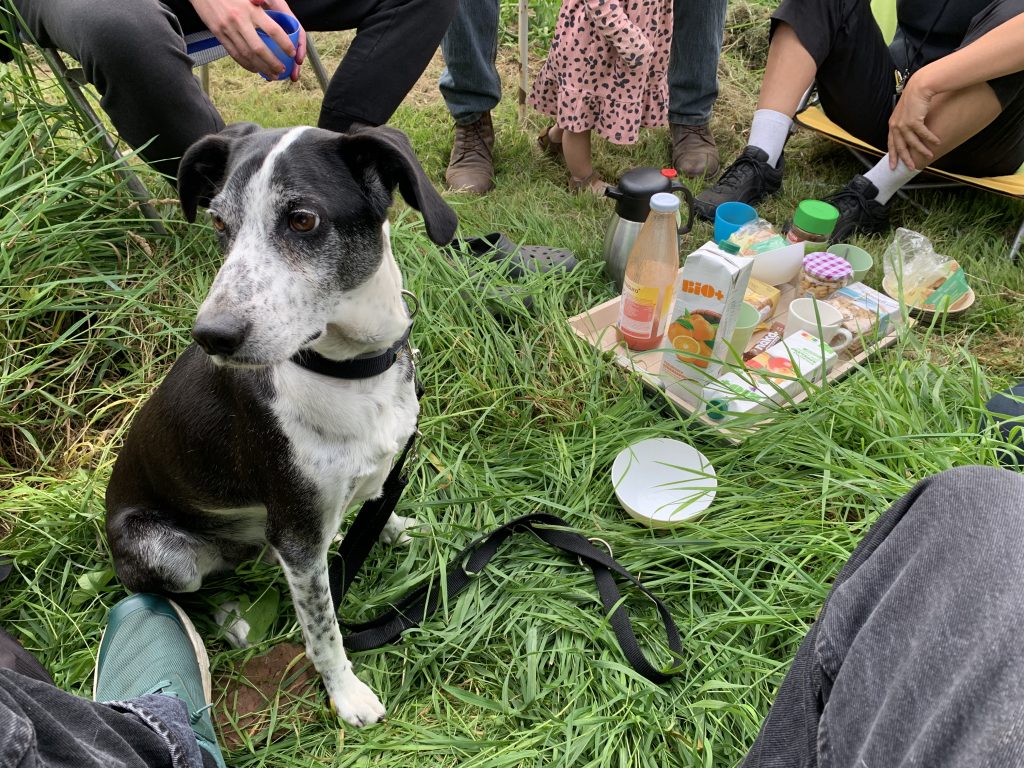
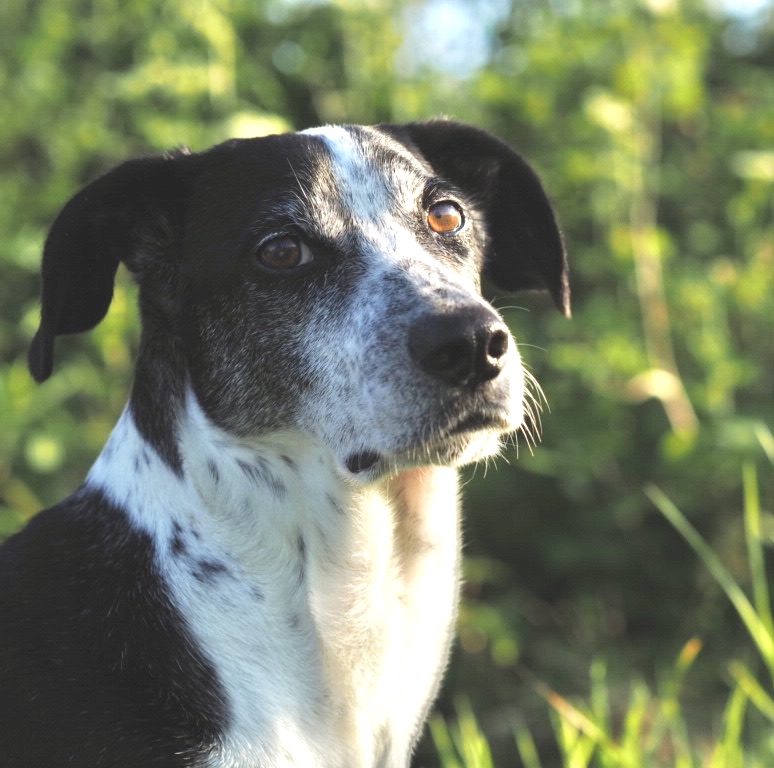
“During a walk with my dog and best friend Bruce through the Scheveningse Bosjes in The Hague, I began to wonder: what would an architecture for dogs look like?
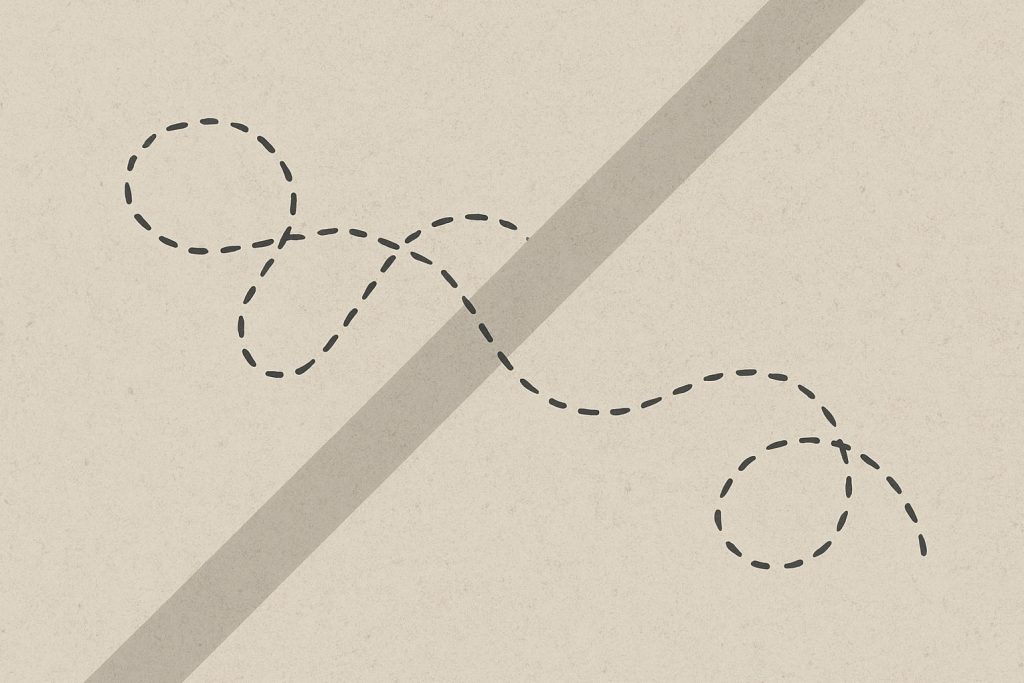
Watching him sniff and listen, I asked myself how one could understand what is spatially relevant for him. The most direct answer was: to follow him.”
Conceptual Framework
Experimental Dog Walks is an artistic research practice developed through walking with dogs as co-perceiving agents.
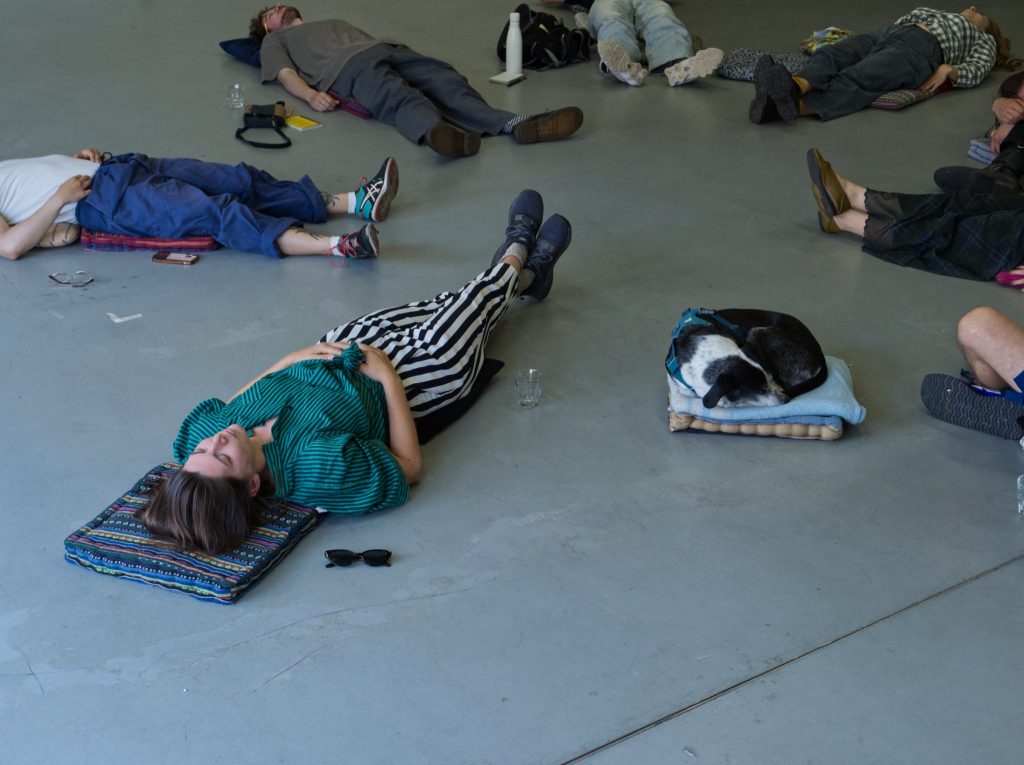
The format consists of three phases: A guided meditative grounding session, an exploratory walk led by the dog, and a collective reflection session.
The aim is to expand sensory awareness and to develop forms of empathy toward non-human ways of experiencing space.
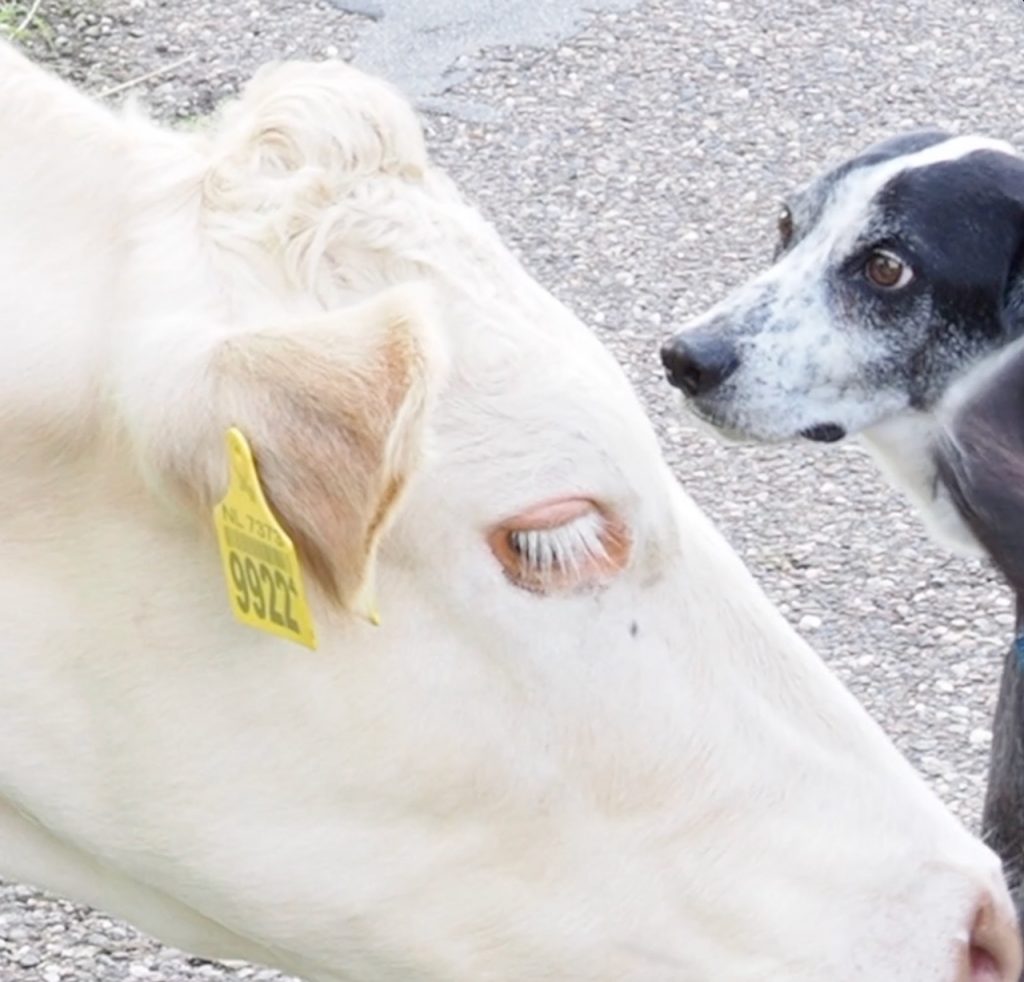
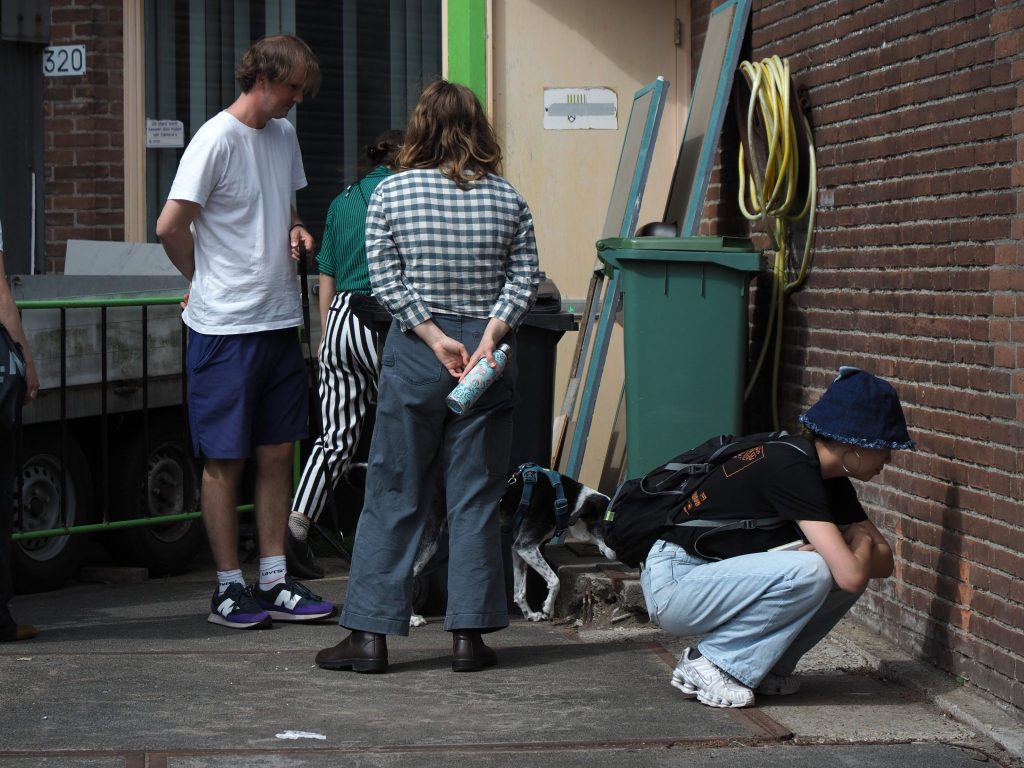
Spatial Exploration through Non-Human Perspectives
The Experimental Dog Walks invite participants to engage with their environment through the sensory logic of a dog.
The practice draws from Lucius Burckhardt’s Strollology and Hildegard Westerkamp’s Soundwalking, extending them by introducing a non-human perspective as an active methodological component.
Dogs perceive space through a different hierarchy of senses. By temporarily shifting attention toward this perceptual difference, the walks ask:
can non-human sensory systems alter how we understand space?
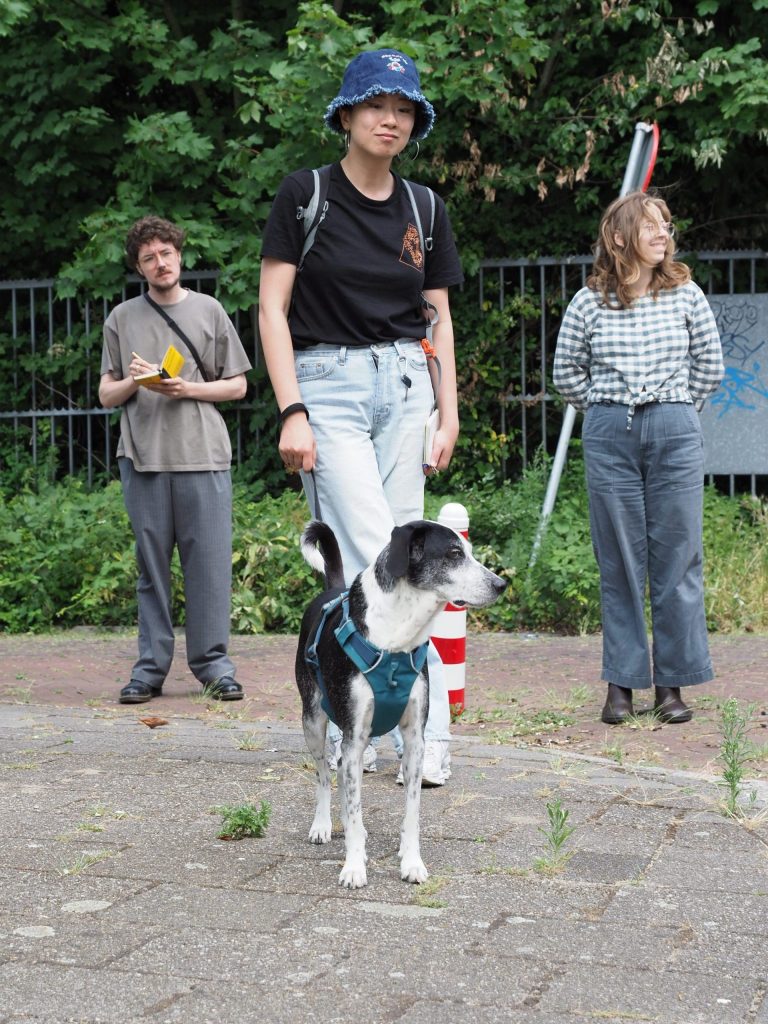
What Participants Explore
- heightened sensory awareness of space through alternative perspectives
- imaginative navigation of parallel spatial realities
- the relationship between perception, attention, and environment in multi-species contexts
Beginning with a guided grounding session, participants attune themselves to canine perception, focusing on sight, smell, and hearing.
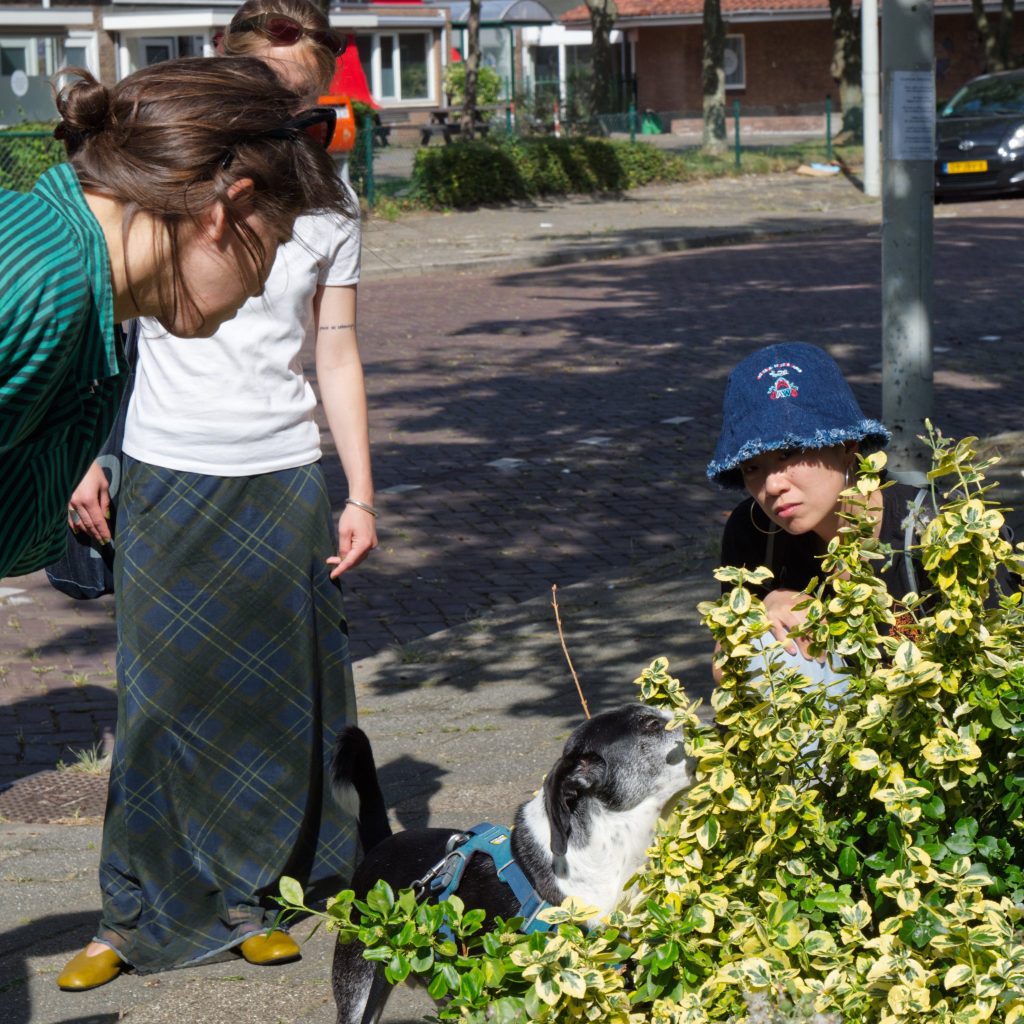
The walk itself unfolds in silence, following Bruce, who acts as both companion and guiding presence.
Participants observe his movements and translate them into speculative readings of spatial attention.
After the walk, a collective reflection session opens a space for discussion.
These conversations address what was perceived, imagined, and overlooked—tracing encounters between human, animal, natural, and technological presences within shared environments.
On Perceptual Shifts
Experimental Dog Walks operate as an extended perceptual practice in which human expectations are continuously displaced by non-human attention.
What appears meaningful to human participants does not necessarily correspond to what becomes relevant within the walk.
In one walk, Bruce led the group toward a heavily trafficked road, despite a nearby natural park offering a more conventional “destination.” The sound of traffic, which participants assumed would be dominant or distracting, appeared irrelevant to his attention.
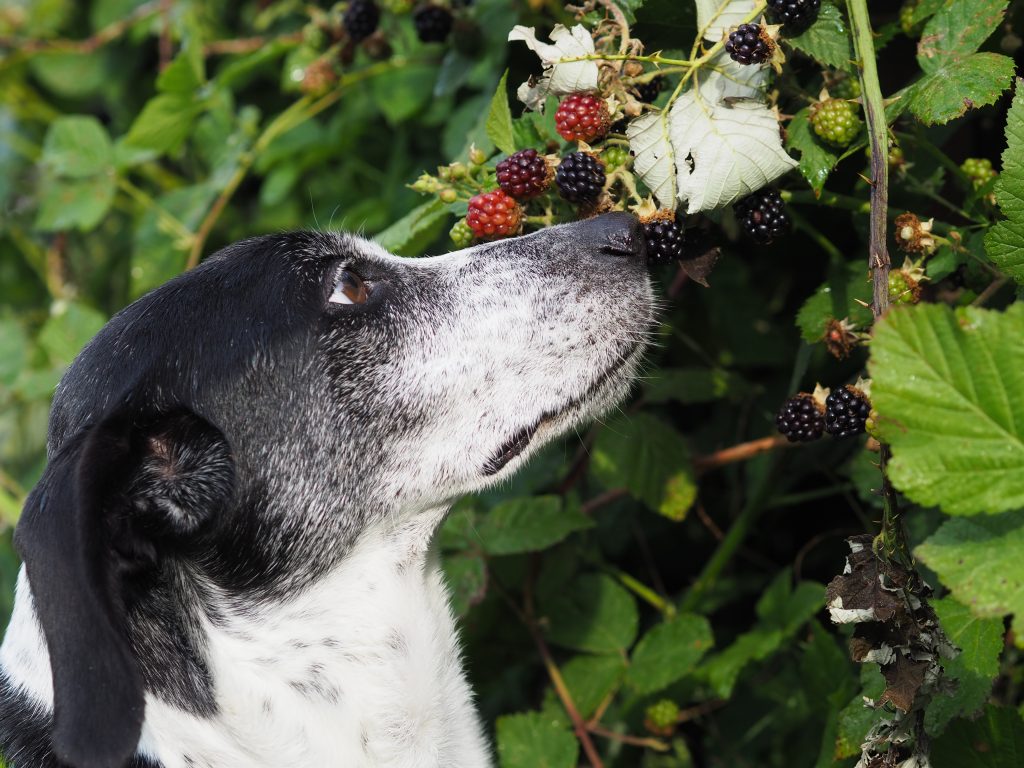
In another moment, participants expected engagement with a discarded children’s sock. Yet it remained unnoticed. Instead, Bruce was drawn to a bush that, from a human perspective, seemed insignificant. This shift caused participants to question what constitutes spatial relevance beyond human perception.
These moments reveal a fundamental condition of the walks: spatial meaning is not shared equally across species.
Interested in joining a walk?
Experimental Dog Walks can be booked for single participants, groups, and institutions.